
How to Choose the Right Stair Railing Contractor Near You

You've decided it's time to replace or upgrade your stair railing, and now you're facing a wall of contractors with similar-sounding promises and wildly different price quotes. Without knowing what separates a truly skilled professional from someone who will cut corners, homeowners in Northern Virginia risk ending up with a railing that looks fine at first glance but fails a code inspection, wobbles within a year, or simply doesn't do justice to the home they've worked hard to build. Choosing the right stair railing contractor is not just about aesthetics; it is about safety, structural integrity, and lasting value.

Key Takeaways
Virginia follows the International Residential Code, and your contractor must know and apply its specific requirements for baluster spacing and riser uniformity.
A railing secured to drywall instead of structural framing is a safety hazard and a red flag during any contractor evaluation.
Railing replacement costs typically range from $800 to $5,000 depending on materials and complexity, so clear written estimates matter.
Asking the right questions before hiring protects your investment and your family.
The best contractors coordinate adjacent work, such as trim and wainscoting, to eliminate extra service visits.
Table of Contents
Why Stair Railing Installation Requires Specialized Expertise
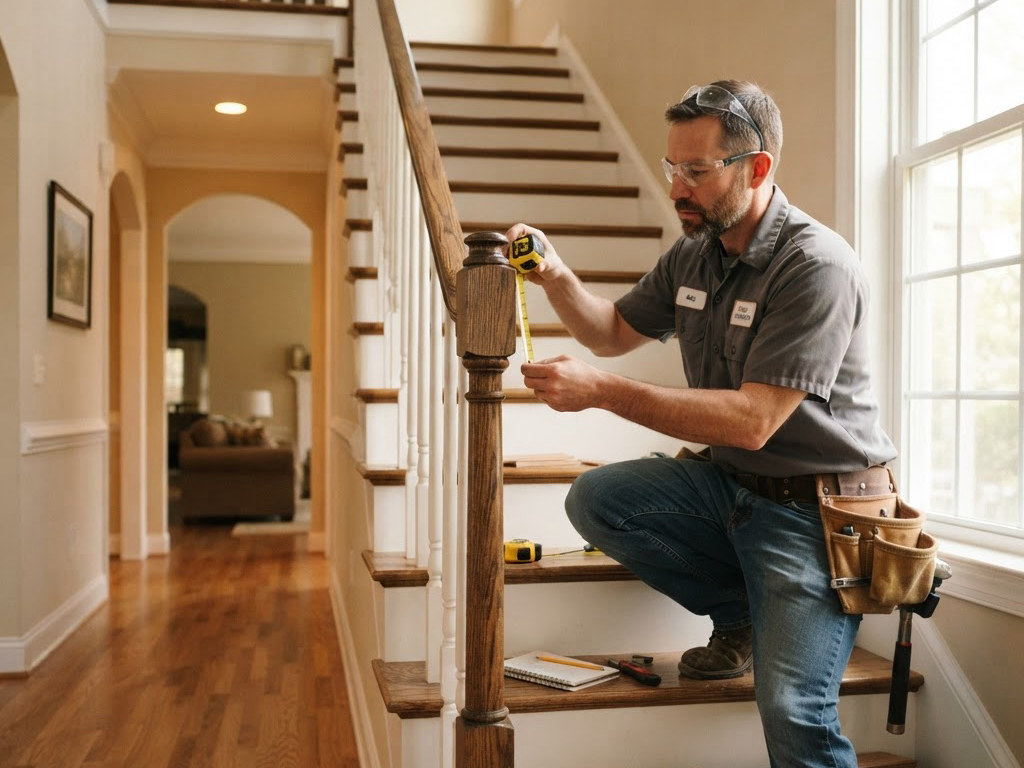
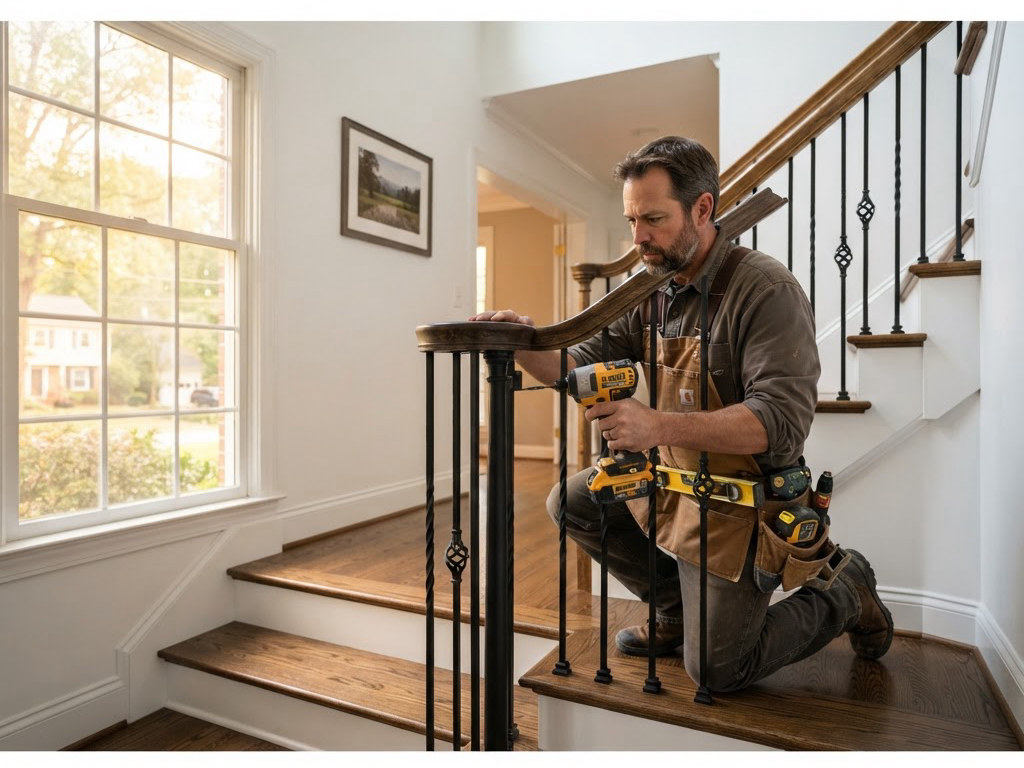
Stair railing installation sits at the intersection of structural carpentry, finish work, and local building code compliance. It is not a task that belongs in the same category as painting a room or replacing a light fixture. A professional stair contractor in Springfield VA understands that a railing system must transfer lateral loads to the structural framing of the home, not to the drywall surface. A loose railing is a significant safety concern, and contractors must ensure railings are secured to framing or solid surfaces rather than just drywall to prevent future failure.
Beyond structural anchoring, professional finish carpentry requires precise miter cuts, accurate baluster spacing, and clean transitions between the railing system and the surrounding trim work. These are skills developed through years of dedicated practice in stair remodeling and trim work, not general handyman experience.
What Virginia Code Requires From Your Contractor
Any qualified contractor working in Northern Virginia must be fluent in the state's adopted building code. Virginia follows the International Residential Code, which mandates specific safety standards including a 4-inch sphere rule for baluster spacing and uniform riser heights to prevent falls. In practical terms, this means a contractor must space balusters so that a 4-inch sphere cannot pass through any opening. Because wood naturally shrinks over time, experienced installers often set balusters at 3.5 inches during installation, ensuring the gap remains compliant for years to come.
Virginia residential code also requires a maximum riser height of 8.25 inches with a tolerance of only 3/8 inch for uniformity across the entire staircase. A contractor who is unfamiliar with these specifics or dismisses them as unimportant is not someone you should trust with your home.
For a full breakdown of what these requirements mean for your project, review our Virginia Stair and Railing Code Checklist.
Questions to Ask Before You Hire
Interviewing a contractor before signing anything is not optional; it is essential. The right questions reveal competency, professionalism, and whether a contractor's experience aligns with your specific project. Here are the most important ones to ask:
Are You Licensed and Insured in Virginia?
Virginia requires contractors to hold a valid contractor's license. Always ask for proof and verify it. General liability insurance and workers' compensation coverage protect you if something goes wrong on your property.
Can You Provide References From Stair Railing Projects Specifically?
General renovation experience is not the same as specialized stair work. Ask for references from homeowners who had railing systems installed or replaced, and follow up by actually calling them.
How Do You Anchor the Railing Posts?
This single question separates knowledgeable contractors from shortcuts. The correct answer involves securing newel posts and wall rail brackets to structural framing, floor joists, or blocking. Any answer that involves relying solely on drywall anchors should end the conversation.
Will You Handle Permits If Required?
Depending on the scope of work in Fairfax County or Prince William County, permits may be required. A professional contractor knows when permits apply and handles that process without placing the burden entirely on you. For deeper guidance on what to ask, see our post on questions to ask a finish carpentry contractor before your remodel.
What Does Your Written Estimate Include?
A professional estimate itemizes demolition of the existing railing, all material costs, labor, and a realistic timeline. Standard replacements typically take one to two days. Complex custom stair design and repair work or full staircase remodels may extend that timeline. Vague estimates with no line items are a warning sign.
Red Flags That Should Stop You From Signing a Contract
Knowing what to look for in a quality contractor is only half the equation. Recognizing the warning signs of a poor one is equally important.
No written contract or estimate. Verbal agreements leave you with no recourse if the work is substandard.
Pressure to pay a large deposit upfront. A reasonable deposit is typical, but demanding 50 percent or more before work begins is unusual.
Unfamiliarity with local code requirements. If a contractor cannot speak confidently about Virginia's IRC adoption, that is a serious concern.
No portfolio of completed stair work. Custom stair design and repair requires a demonstrable track record. Ask to see photos or visit a completed project if possible.
Unusually low bids. While cost matters, a bid significantly below all others often signals the use of inferior materials or non-compliant installation methods.
Ready to work with a team that meets every standard on this list? Contact Us today and let's discuss your stair railing project in detail.
Contractor Comparison: What Separates Good From Great
Evaluation Criteria | Average Contractor | Expert Contractor (Vivanco's Trim Standard) |
Railing Anchoring Method | Drywall anchors or surface mounting | Secured to structural framing or blocking |
Code Knowledge | General awareness | Specific IRC standards for Virginia, including baluster spacing and riser uniformity |
Written Estimate | Lump sum with minimal detail | Itemized: demolition, materials, labor, and timeline |
Project Timeline | Vague or undefined | 1 to 2 days for standard replacement; clear milestones for complex work |
Baluster Spacing Precision | Measured to 4 inches exactly | Set at 3.5 inches to account for wood shrinkage over time |
Coordination With Adjacent Work | Railing only | Coordinates trim, wainscoting, and flooring upgrades in a single visit |
Specialty Material Experience | Wood only | Wood, metal, and glass railing systems with verified tool sets and expertise |
The Value of Coordinating Railing Work With Adjacent Upgrades
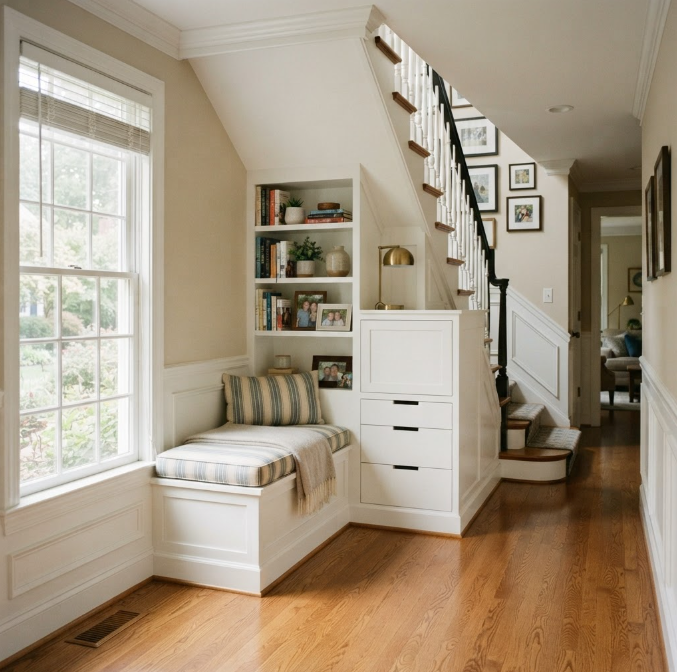
One of the most practical advantages of hiring a home renovation contractor in Northern Virginia who specializes in professional finish carpentry is the ability to coordinate multiple improvements in a single project. Consider a scenario where a homeowner upgrades their railing system while also adding wainscoting to the stairwell wall. When both scopes of work are managed by the same skilled team, the visual result is cohesive, the transitions between elements are precise, and the homeowner avoids the cost and disruption of scheduling two separate contractors.
This is especially relevant for homeowners exploring stair remodeling in Woodbridge VA or those undertaking larger renovations where interior trim installation services, flooring, and stair work all need to align visually and structurally. Our post on planning your staircase renovation covers how to approach this coordination from the start.
If you are also considering a glass railing system, note that this specialty requires verified experience with the specific tools and structural demands of glass installation. You can explore current design directions in our post on top glass staircase ideas for 2026.
For homeowners ready to move forward with a full banister replacement or railing upgrade, our dedicated service page on stair railing and bannister installation outlines exactly what that process looks like with Vivanco's Trim. And if you are unsure whether replacement is even necessary yet, our guide on how to know when it's time for a staircase bannister replacement can help you decide.
Proper stair construction and code-compliant railing installation are essential for reducing the risk of home injuries and maintaining property resale value. Working with a contractor who understands both the structural and aesthetic dimensions of this work is not a luxury; it is the right standard for your home.
When you're ready to move forward with confidence, Contact Us at Vivanco's Trim and let's build something that will stand up for years to come.
FAQs
What questions should I ask a stair railing contractor before hiring?
Ask about Virginia licensing, insurance, anchoring methods, code knowledge, and whether their written estimate itemizes demolition, materials, and labor. References from stair-specific projects are essential.
How much does stair railing replacement cost in Northern Virginia?
Railing replacement typically ranges from $800 to $5,000 depending on materials and complexity. Full staircase remodels can exceed $20,000. Always get an itemized written estimate.
What are the Virginia code requirements for stair railings?
Virginia follows the IRC, requiring balusters spaced so a 4-inch sphere cannot pass through, and riser heights no greater than 8.25 inches with no more than 3/8-inch variation across the staircase.
How long does stair railing installation take?
Standard railing replacements typically take one to two days. Custom designs, glass systems, or full staircase remodels may require additional time. Your contractor should provide a clear written timeline.
What is a red flag when hiring a stair railing contractor?
Key red flags include no written contract, unfamiliarity with Virginia building code, anchoring to drywall instead of framing, no stair-specific portfolio, and bids significantly lower than all competitors.
Comments