
Carpet to Hardwood Stair Conversion in Springfield and Fairfax, VA: What to Expect and How to Get It Right

There is a moment every homeowner who removes carpet from their stairs goes through. The first section comes up and they find out what is underneath. Sometimes it is original hardwood in excellent condition waiting to be refinished. Sometimes it is builder-grade pine that will need to be overlaid. And sometimes it is plywood substrate that was never meant to be seen at all.

What happens in that moment determines the entire direction of the project, and it is the reason why carpet-to-hardwood stair conversion is more nuanced than it looks in before-and-after photos on social media.
Carpeted stairs dominated residential construction in Fairfax County, Springfield, and Annandale from the 1960s through the early 2000s. A significant portion of Northern Virginia homes still have them, and homeowners who have updated their main-level flooring to hardwood or luxury vinyl plank are increasingly aware of the visual disconnect a carpeted staircase creates in an otherwise modernized interior. The staircase becomes the one element that anchors the home to a previous era.
At Vivanco's Trim, stair conversion from carpet to hardwood is one of the most frequently requested renovation projects we handle throughout Springfield, Fairfax, Annandale, and surrounding Northern Virginia communities. This guide covers the full process, the three substrate scenarios you are likely to find, your installation options, and what professional installation delivers that DIY tutorials tend to underestimate.
Key Takeaways
What you find beneath the carpet, original hardwood, pine, or plywood, determines the installation approach and the best material strategy.
Retrofit tread overlays are the most common installation method for carpet-to-hardwood conversions on builder-grade substrates in Northern Virginia.
Red oak and white oak are the most popular species for stair tread conversions, with white oak growing significantly in demand as homeowners match newer wide-plank floors.
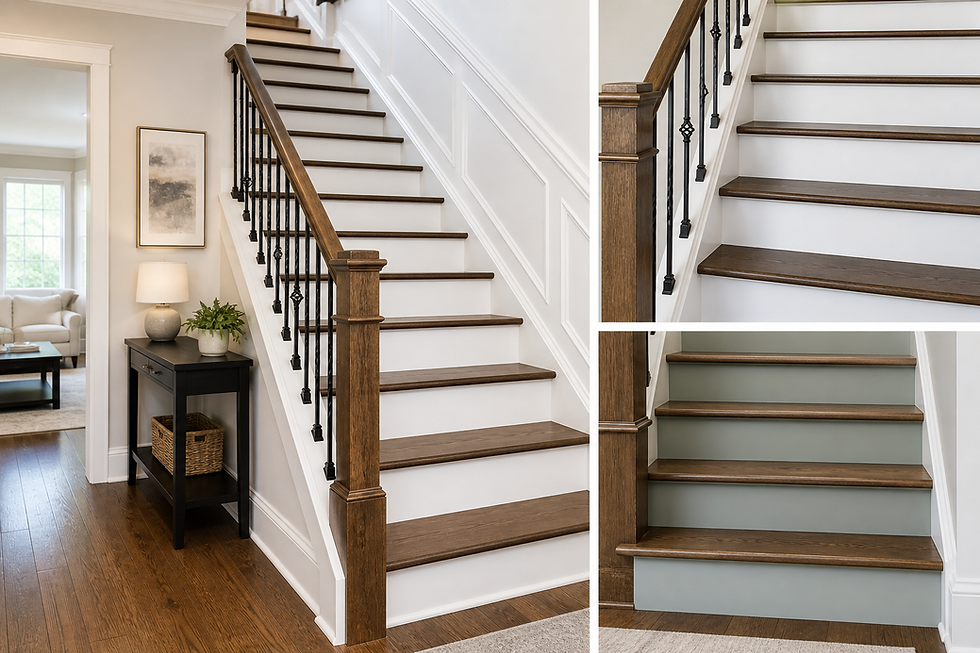
White painted risers paired with stained hardwood treads is the dominant finish combination requested in Fairfax County and Springfield renovations.
Tack strip removal and substrate preparation take as much time as the installation itself and are the steps most commonly rushed in DIY attempts.
Matching new stair treads to existing hardwood flooring requires on-site staining rather than prefinished material in most cases.
Table of Contents
Why Northern Virginia Homeowners Are Converting Carpeted Stairs
Carpet on interior stairs made practical sense in an era when hardwood floors on the main level were more exception than standard. It was soft, quiet, warm in winter, and relatively economical. In a home built in the 1980s or early 1990s where the main-level floors were also carpet, the staircase was visually consistent with its surroundings.
That context has changed significantly. The majority of Fairfax County and Springfield homeowners who have undertaken interior renovations in the past decade have replaced main-level carpet with hardwood or luxury vinyl plank. Kitchen and bathroom renovations have followed. The staircase, which was previously just another carpeted surface, is now the most visible element in the home that has not been updated, and it shows.
Beyond aesthetics, carpet on stairs ages differently than carpet on flat floors. The tread nose concentrates wear at a single linear point, causing carpet to fray and compress in a pattern that no amount of cleaning can reverse. Carpeted stairs also trap allergens, pet hair, and dust at every tread-riser junction in a way that is genuinely difficult to clean thoroughly. Hardwood treads eliminate that accumulation entirely.
The conversion also intersects with home resale. In the Northern Virginia real estate market, buyers responding to stair and flooring updates are significantly more engaged with homes that present a cohesive, updated interior from the entry through the main level. A freshly converted staircase reads immediately as a quality finish detail.
The Three Substrate Scenarios and What They Mean for Your Project
The substrate beneath the carpet determines everything about the installation approach. Before any conversion project can be planned accurately, the carpet must be pulled back at least one step to assess what is underneath.
Substrate Found | Condition | Recommended Approach |
Original hardwood treads | Good, minimal damage | Sand, stain, and refinish in place |
Original hardwood treads | Heavily worn or damaged | Retrofit overlay or full tread replacement |
Builder-grade pine treads | Rough, soft, stained | Retrofit overlay with hardwood tread caps |
Plywood or OSB substrate | Structural-grade only | Full tread replacement required |
Original hardwood treads in good condition are the best possible outcome. Many Northern Virginia homes built between the 1950s and 1970s have solid oak treads beneath the carpet that were installed during original construction and covered later. If these treads have enough thickness remaining after years of settling and are not damaged by tack strip removal, they can be sanded and refinished in place to produce a result that is visually indistinguishable from new. This is the most cost-efficient path when the substrate supports it.
Builder-grade pine treads are the most common substrate in Fairfax County homes built between the 1970s and early 2000s. Pine is a softwood that scratches and dents easily, absorbs stain unevenly, and does not produce a finish-grade result when sanded and stained. The professional approach for pine substrates is to overlay them with retrofit hardwood tread caps, which install directly over the existing structure after the nose is prepared and the surface is cleaned.
Plywood or OSB substrate is found in homes where the staircase was framed for carpet from the start with no finish-grade material planned beneath it. This substrate cannot be refinished and does not provide an adequate bonding surface for adhesive-only retrofit treads. Full tread replacement, which involves removing the substrate down to the stringer and installing new finish-grade treads from scratch, is the appropriate solution.
Retrofit Tread Overlays vs. Full Tread Replacement
These are the two primary installation methods for carpet-to-hardwood conversions. Understanding the difference helps set realistic expectations for scope and timeline.
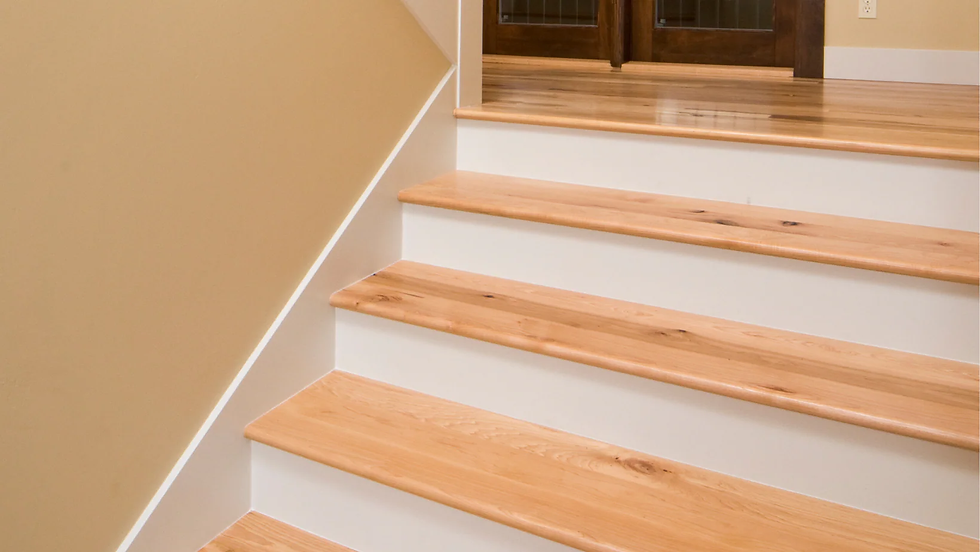
Retrofit tread overlays are hardwood tread caps that install over the existing tread surface after the old bullnose is removed to create a flat profile for the new tread to sit against. They are approximately 5/8 to 3/4 inch thick and include a new bullnose nosing at the front. The result looks and feels like a full hardwood tread and produces a professional result on pine or structurally sound plywood substrates.
Retrofit overlays are faster and less disruptive than full replacement. They do not require rebuilding the stair structure, do not risk altering tread height or depth dimensions, and can typically be completed in a single workday on a standard straight staircase. The existing risers are replaced or painted at the same time, giving the full staircase a fresh appearance without structural reconstruction.
Full tread replacement removes the existing tread material down to the stringer and installs new full-thickness hardwood treads. This is the right approach when the existing substrate is plywood, when the existing pine treads are too damaged for a clean overlay installation, or when the homeowner wants a custom stair design that requires precise tread geometry not achievable with overlay stock.
Full replacement takes longer and requires more structural preparation, but it produces the most precise, durable result and gives the installer the greatest control over the final tread dimensions and profile.
The Carpet Removal and Substrate Prep Process
This phase of the project takes as much time as the installation itself and is the step most frequently underestimated in DIY guides that focus on the finished product.
Step 1: Carpet removal. The carpet is cut into manageable sections and pulled from each tread, working from the top of the staircase down. On most Northern Virginia homes, carpet is attached with tack strips at the back of each tread and staples or tacks at the riser base. Pulling the carpet off the tack strips without damaging the tread beneath requires controlled force and experience with how the carpet is anchored.
Step 2: Pad and tack strip removal. The carpet pad is removed and disposed of, followed by every tack strip on every step. Tack strips are nailed into the tread and must be pried out without gouging the substrate below. Any remaining staples, tacks, or crown nails are pulled individually with pliers and a staple remover. This is the most time-consuming step of the demolition phase. As noted in Lowe's carpet-to-hardwood stair guide, every staple and tack must be fully removed before new tread installation begins, as any remaining hardware will prevent the new tread from sitting flat.
Step 3: Substrate assessment. Once the tread surface is clear, the installer assesses the condition and species of the existing material. Soft spots, delamination, significant gouges, and moisture damage all affect the installation method. This assessment determines whether retrofit overlay or full replacement is the correct path forward.
Step 4: Nosing preparation. For retrofit overlay installations, the existing bullnose is removed using a circular saw set to the depth of the nosing projection. This creates a flat front face on each tread that the new overlay can sit cleanly against. This cut must be accurate across the full width of every tread for the new nosings to align consistently.
Step 5: Surface cleaning and leveling. Any remaining adhesive residue, staple holes, or minor voids in the substrate are addressed before installation begins. The goal is a flat, clean, structurally sound surface on every step.
Ready to convert your carpeted stairs to hardwood in Springfield or Fairfax? Call Vivanco's Trim at (703) 499-2045 or request your free estimate online.
Choosing Your Wood Species and Finish
With the substrate prepared, the material and finish selection determines how the finished staircase will look and how it will wear over time. The most important considerations are species durability, grain compatibility with the finish, and match to the surrounding floors.
Red oak remains the most installed species for stair tread conversions in Northern Virginia. It is durable, stains evenly, and matches the existing flooring in the majority of Fairfax County and Springfield homes built between the 1970s and 2000s. If the main-level floors are red oak, new red oak stair treads finished with the same stain formula produce a seamless transition from the floor to the staircase.
White oak has grown significantly in demand as homeowners update their main-level floors to wide-plank white oak, which has become the dominant choice in premium Northern Virginia remodels over the past five years. White oak's tighter grain and golden tone produce a different finished appearance from red oak, and the two should not be mixed on the same staircase when staining is the goal. For more on species selection, our stair tread replacement guide covers the full comparison.
For the risers, painted white is the standard in area conversions. White painted risers finished in semi-gloss against a stained hardwood tread create the high-contrast look that is now ubiquitous throughout renovated Fairfax County and Springfield homes. It is clean, timeless, and compatible with virtually every interior color scheme. The stair riser replacement guide covers riser materials and painted finish options in detail.
Matching Stair Treads to Existing Hardwood Floors
This is the question homeowners ask most often during conversion consultations: will the new treads match the floors on the main level?
The direct answer is that prefinished treads purchased from a supplier will rarely match site-finished floors exactly. Factory finishes use standard stain formulas applied under controlled conditions that produce a result different from the appearance of floors that have been stained and finished in place years earlier. Color also changes with exposure to sunlight over time, so an existing floor that was stained five years ago looks different from the same stain formula applied to new wood today.
The solution used by professional installers in Northern Virginia is to finish the new treads on-site using a custom stain formula blended to match the existing floor. This involves staining a small test section of the new tread species and comparing it to the existing floor under the same lighting conditions before committing to the full application. An experienced installer can get very close to an existing floor color using this method.
When an exact match is not achievable, a complementary contrast is the professional alternative. Slightly lighter or slightly darker treads that work within the same color family as the existing floor read as an intentional design decision rather than a mismatch. This approach is often used when existing floors have aged to a tone that no longer matches any standard stain formula cleanly.
Pairing a stair conversion with a full staircase renovation that includes baluster replacement and railing updates ensures that all the staircase components are addressed together and the finished result is fully cohesive from the floor to the handrail.
DIY vs. Professional Stair Conversion
Carpet-to-hardwood stair conversion is one of the more commonly attempted major DIY projects in Northern Virginia homes, and one of the more commonly redone by professionals. The gap between a finished DIY result and a professional result is visible at three specific points.
Tread fit. Every tread on a staircase must be measured and cut individually because stairs in older Northern Virginia homes are almost never perfectly square or perfectly consistent in width from step to step. An installer who measures once and cuts all treads to the same dimension will produce a result with visible gaps at the wall on one or both sides. Professional installation measures each step individually before cutting.
Nosing alignment. The front edge of the new tread must overhang the riser consistently across the full width of the step and consistently from step to step throughout the flight. Nosing that varies in projection or alignment is immediately visible from the bottom of the staircase looking up. Achieving consistent nosing alignment across 12 to 14 steps requires both precise substrate preparation and careful tread positioning during installation.
Finish quality. On-site staining and finishing requires multiple coats, sanding between coats, and careful application at the edges and joints where the tread meets the riser and the wall. Rushed or imprecise finish work shows clearly in the final result, particularly at the nosing where the finish is most visible and most subject to wear.
A professional conversion eliminates each of these failure points through proper measurement, substrate preparation, and finishing technique. The result is a staircase that looks built that way, not converted.
Frequently Asked Questions
How do I know if my stairs have hardwood under the carpet?
The most reliable way is to carefully lift one corner of the carpet at the top or bottom of the staircase and look at the exposed tread material. Hardwood will show a smooth, grained wood surface. Pine will appear as a lighter, softer-grained wood. Plywood will show layer lines at the exposed edge. A professional assessment during a free consultation can confirm the substrate and recommend the right installation method.
Can carpeted stairs be converted to hardwood without removing the risers?
In most cases, yes. When the existing risers are in acceptable structural condition, they can be painted white in place after the carpet and tack strips are removed from the riser face. Full riser replacement is recommended when the existing risers are damaged, heavily stained, or too rough to produce a clean painted finish after preparation.
Will my new stair treads match my existing hardwood floors?
Prefinished treads rarely match site-finished floors exactly due to factory color standards and floor aging. Professional installers blend custom stain formulas on-site and test against the existing floor before full application. This method produces the closest possible color match. When an exact match is not achievable, a complementary contrast is the practical alternative.
Is carpet-to-hardwood stair conversion worth it for resale in Fairfax County?
Yes. In the Northern Virginia real estate market, buyers consistently respond positively to updated staircases in renovated interiors. A staircase that matches the hardwood or hard surface flooring throughout the main level signals a cohesive, quality renovation that supports buyer confidence and reduces negotiation friction at time of sale.
How long does a carpet-to-hardwood stair conversion take?
A standard straight staircase of 12 to 14 steps with a retrofit overlay installation typically takes two to three days, including carpet removal, substrate preparation, tread installation, riser painting, and finish coats. Full tread replacement projects and staircases with landings or winder treads take longer and are scoped individually based on the specific conditions.
Schedule a Free Staircase Consultation with Vivanco's Trim
Whether your staircase has original hardwood waiting to be revealed or a pine substrate ready for a hardwood overlay, Vivanco's Trim is ready to help you plan and execute the conversion. We serve homeowners throughout Fairfax County and a 15 to 20-mile radius of Woodbridge, Virginia, with expert stair design, installation, and renovation services.
We start every project with a free in-home consultation, assess the substrate beneath your carpet, walk you through species and finish options, and provide a clear estimate before any work begins. Our craftsmen take measurement, substrate preparation, and finish quality seriously on every conversion because that is what makes the difference between a staircase that looks renovated and one that looks new.
Call (703) 499-2045 or (571) 567-4424 7646 Fullerton Rd Suite A, Springfield, VA 22153 Monday – Friday: 7:00 AM – 7:00 PM | Weekends: By Appointment
References:
Lowe's. (2021). How to Convert Carpeted Stairs to Hardwood.
HomeLight. (2024). How to Remodel Stairs from Carpet to Wood.
Virginia Department of Housing and Community Development. (2024). Virginia Uniform Statewide Building Code.

Comments