
Stair Tread Replacement in Springfield and Fairfax, VA: Wood Species, Code Requirements, and What Homeowners Need to Know

Every step you take on a staircase lands on a tread. It is the horizontal surface your foot contacts, the part that takes the full force of daily traffic, and the most visible element of any staircase from the ground floor looking up. When treads are worn, cracked, carpeted over, or simply outdated, they pull down the look and safety of the entire staircase regardless of how good the railing system around them is.
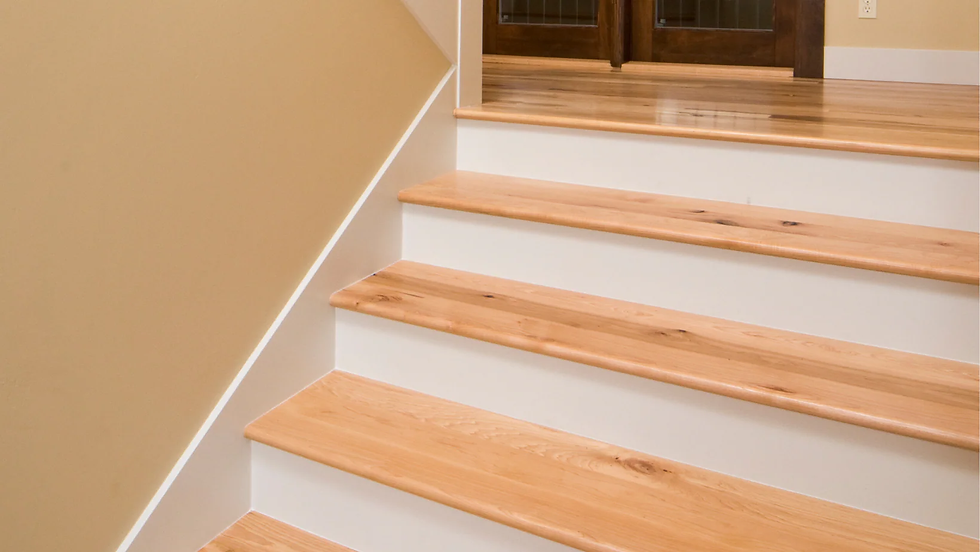
Tread replacement is one of the most impactful single upgrades a homeowner in Fairfax County or Springfield can make. In many cases it does not require touching the railing, the newel posts, or the staircase structure beneath. New treads in the right wood species, properly installed and finished, can transform a staircase that looked tired into one that looks intentional and built to last.
At Vivanco's Trim, stair tread installation and replacement is a core part of the staircase work we do throughout Springfield, Fairfax, Annandale, and surrounding Northern Virginia communities. This guide covers everything you need to make an informed decision before starting your project.
Key Takeaways
Stair treads are the horizontal surfaces you step on, and their condition directly affects both safety and the visual quality of the staircase.
Virginia's residential code requires a minimum tread depth of 9 inches with a nosing projection, or 11 inches without one, and uniform depth throughout the entire flight.
Red oak is the most common species for Northern Virginia stair treads, though white oak, maple, and hickory are popular alternatives.
Retrofit treads can be installed over existing structure in most cases, avoiding the need to rebuild the staircase from scratch.
Converting carpeted stairs to hardwood treads is one of the most requested staircase upgrades in the area.
Uniformity across the entire flight is the most important installation factor, both for code compliance and for daily safety.
Table of Contents
What a Stair Tread Is and Why It Matters
Virginia's Stair Tread Code Requirements
Full Replacement vs. Retrofit Treads: Which Approach Is Right for You?
Converting Carpeted Stairs to Hardwood Treads
Hardwood Species Compared for Northern Virginia Staircases
Tread Nosing Profiles and What They Mean
Signs Your Stair Treads Need to Be Replaced
DIY vs. Professional Stair Tread Installation
Frequently Asked Questions
Schedule a Free Consultation with Vivanco's Trim
What a Stair Tread Is and Why It Matters
A stair tread is the horizontal board that forms the walking surface of each step. It sits on top of the stair structure, overhangs the riser below by a defined amount called the nosing, and bears the full load of foot traffic every time someone uses the stairs.
Treads work as a system alongside risers, which are the vertical boards between each step. Together they define the rhythm of the staircase. When tread depth or riser height varies even slightly from step to step, the body's expectation of the next step is disrupted, which is one of the most common causes of stair-related missteps and falls.
Beyond safety, treads are the visual centerpiece of any staircase looking up from the bottom floor. The wood species, finish color, nosing profile, and surface texture of the treads set the tone for everything else. A set of freshly installed hardwood treads paired with a well-maintained stair railing immediately reads as a premium, thoughtfully finished staircase. Worn or mismatched treads undercut even the best railing work around them.
Virginia's Stair Tread Code Requirements
Before selecting any tread material or profile, every Northern Virginia homeowner should understand the code requirements that govern tread dimensions. Virginia follows the International Residential Code, which specifies exact dimensions for tread depth, nosing projection, and uniformity across a flight.
Measurement | Virginia Residential Code Requirement |
Minimum tread depth (with nosing) | 9 inches, measured from nosing to nosing |
Minimum tread depth (without nosing) | 11 inches |
Nosing projection | Minimum 3/4 inch, maximum 1-1/4 inches |
Nosing radius of curvature | No greater than 9/16 inch |
Maximum riser height | 8-1/4 inches |
Maximum variation between treads | 3/8 inch within a single flight |
Maximum variation between risers | 3/8 inch within a single flight |
The uniformity requirement is the one that catches most homeowners off guard during replacement projects. As confirmed by Fairfax-area stair code guidance, all treads within a single flight must fall within 3/8 inch of each other in depth, and all risers must fall within 3/8 inch of each other in height. This means that if you replace only some treads on a staircase, the new ones must match the existing dimensions precisely or the entire flight may need adjustment to maintain compliance.
This is one of several reasons why professional measurement and installation matters on tread replacement projects. A single tread that is slightly out of dimension with the rest of the flight creates a genuine tripping hazard and a code violation.
Full Replacement vs. Retrofit Treads: Which Approach Is Right for You?
When planning a tread replacement, homeowners have two main approaches. Understanding the difference helps set realistic expectations for the scope and timeline of the project.
Full tread replacement involves removing the existing treads entirely down to the stair structure and installing new full-thickness treads from scratch. This approach is used when the existing treads are structurally damaged, when the staircase is being reconfigured, or when the homeowner wants the cleanest possible result with the most flexibility in tread profile and thickness. Full replacement typically requires more time and more preparation of the substrate beneath the treads.
Retrofit treads, also called overlay treads, are installed directly over the existing tread surface after the carpet and any tack strips are removed. They are thinner than full treads and are designed to sit flush against the existing riser so the step dimensions are not altered. Retrofit treads are a strong choice for carpeted stairs being converted to hardwood because they avoid the need to re-cut risers and re-adjust the staircase geometry. When the substrate beneath the carpet is a sound pine or plywood construction, a retrofit installation delivers an excellent result efficiently.
The right approach for your staircase depends on what is underneath the existing surface and what condition it is in. A professional assessment before starting ensures you choose the method that will last.
Converting Carpeted Stairs to Hardwood Treads
Carpet-to-hardwood conversion is one of the most requested staircase projects in Springfield and Fairfax County homes. Carpet was the standard finish on interior stairs in residential construction throughout the 1980s and 1990s, and a large portion of Northern Virginia's housing stock still has it.
The appeal of the conversion is clear. Hardwood treads are easier to clean, more durable over time, more visually refined, and better aligned with the flooring choices most homeowners are making throughout the rest of the home. When a home has hardwood or luxury vinyl plank on the main level and carpeted stairs, the transition reads as unfinished.
The conversion process involves removing carpet and tack strips, assessing the condition of the substrate below, preparing the surface, and installing new hardwood treads and painted or stained risers. In many cases, the risers are painted white while the treads are stained to match adjacent flooring, which is the most popular finish combination in Northern Virginia remodels.
Pairing the tread conversion with a stair railing upgrade at the same time is a practical approach because the staircase is already being worked on and the two projects together create a cohesive finished result.
Hardwood Species Compared for Northern Virginia Staircases
Choosing the right wood species for stair treads involves balancing durability, appearance, and compatibility with the rest of the home's interior. Here is how the most common options compare for Northern Virginia homes:
Species | Hardness (Janka) | Appearance | Best For |
Red Oak | 1,290 | Warm reddish-brown, pronounced grain | Traditional, colonial, transitional homes |
White Oak | 1,360 | Golden tan, tighter grain than red oak | Transitional, contemporary, modern farmhouse |
Hard Maple | 1,450 | Creamy white to light brown, fine grain | Modern and minimalist interiors |
Hickory | 1,820 | High contrast light and dark striping | Rustic and craftsman styles |
Walnut | 1,010 | Deep chocolate brown, straight grain | Premium traditional and formal interiors |
Poplar | 540 | Uniform pale tone, paints well | Budget-friendly painted tread applications |
Red oak is by far the most common species installed on Northern Virginia staircases. It accepts stain evenly, matches the existing flooring in many area homes built between the 1970s and 2000s, and is durable enough to handle decades of high-traffic use. As noted by stair specialists at Stair Creations Fairfax, oak stair treads are a popular choice for their strength, while maple treads offer a smoother, lighter finish suited to more contemporary interiors.
White oak has grown significantly in popularity in recent years as homeowners update their interiors toward a cleaner, more transitional aesthetic. Its tighter grain and golden tone photograph beautifully and complement the wide-plank white oak flooring that has become common in Fairfax County renovations.
Hard maple is the right choice when durability and a light, neutral appearance are both priorities. Its fine, close grain resists denting well and accepts light stains that keep the wood's natural brightness.
Thinking about replacing your stair treads in Springfield or Fairfax? Call Vivanco's Trim at (703) 499-2045 or request a free estimate online.
Tread Nosing Profiles and What They Mean
The nosing is the front edge of the tread that overhangs the riser below. Its profile affects both the appearance of the staircase and its safety underfoot. Virginia's residential code requires nosing projections between 3/4 inch and 1-1/4 inches for treads under 11 inches in depth, with a radius of curvature no greater than 9/16 inch at the leading edge.
Bullnose nosing is the most common profile, featuring a fully rounded front edge. It is the standard on traditional and colonial staircases throughout Fairfax County.
Eased nosing has a slightly softened edge rather than a full round. It is commonly used on transitional and craftsman staircases where a cleaner profile is preferred without going fully square.
Square nosing is used primarily on modern and contemporary staircases where clean lines are part of the design language. When a square nosing is used, the tread depth must be at least 11 inches to meet code without the projection requirement.
Return nosing wraps the side of the tread where it is exposed at the open end of the staircase, finishing the tread on its visible side edge. This detail is required on any tread where the end grain would otherwise be visible from the side.
Nosing profile selection should align with the overall staircase design and the baluster and railing style being used. A bullnose tread with traditional turned balusters reads as a cohesive traditional staircase. A square-nose tread with slim iron balusters reads as a cohesive modern one. Mixing profiles and styles across the system creates visual inconsistency that is hard to overlook.
Signs Your Stair Treads Need to Be Replaced
Deep gouges, cracks, or splits that run through the thickness of the tread compromise structural integrity. Surface scratches can be sanded and refinished, but cracks that affect the tread's load-bearing capacity require full replacement.
Soft spots or flex underfoot indicate that the tread or the substrate below has deteriorated. This is common in older homes where moisture has worked its way under the surface over time.
Severe wear at the nosing that has reduced the nosing projection below code minimum or created a sharp, unsafe edge that cannot be corrected by refinishing alone.
Uneven tread depths or heights that exceed the 3/8-inch tolerance allowed by the Virginia Residential Code. This is sometimes discovered after carpet removal reveals that the original construction was not precise, or that previous repairs introduced inconsistency.
Persistent squeaking that does not respond to tightening fasteners from below often means the tread itself has shifted or warped and needs replacement rather than repair. For a detailed look at diagnosing stair noise, see our homeowner's guide to squeaky stair repair.
Carpet that is beyond its useful life sitting over treads whose condition is unknown. Removing old carpet frequently reveals substrate conditions that call for replacement rather than retrofit.
DIY vs. Professional Stair Tread Installation
Stair tread installation looks manageable and is frequently attempted as a DIY project, particularly for simple retrofit installations on straight staircases. A homeowner with solid carpentry skills, accurate measuring tools, and patience can achieve a satisfactory result in the right conditions.
However, the margin for error on stair treads is narrower than most DIY guides suggest. Every tread in the flight must be cut to the exact depth of the existing steps, which are almost never perfectly square or uniform in a home that has settled over years. Each cut must account for the precise width of that individual step, which may vary from the one above and below it. Nosing returns must be mitered cleanly. Fasteners must be set without cracking the finished surface.
The code uniformity requirement adds another layer of precision. A tread that ends up even 1/2 inch shallower or deeper than its neighbors creates a trip hazard that may not be obvious during installation but becomes very obvious to anyone descending the stairs in low light.
Professional installation includes a full measurement of every step individually before any cuts are made, proper substrate preparation, accurate nosing fitting, and a finish that integrates cleanly with the risers and the adjacent floor surface. The result is a staircase where every step feels identical underfoot, which is exactly how it should feel and exactly what the code requires.
Frequently Asked Questions
Can I replace stair treads without replacing the risers?
Yes, in most cases. Treads and risers can be addressed independently. Many homeowners replace treads in hardwood while repainting the existing risers white, which is a popular and clean finish combination throughout Northern Virginia. If the existing risers are structurally sound, they typically do not need replacement when treads are changed.
How thick should replacement stair treads be?
Full replacement treads are typically 1 inch thick for standard stair construction. Retrofit treads installed over existing surfaces run approximately 5/8 to 3/4 inch thick to avoid significantly altering the step height. The right thickness depends on which installation method is used and what the existing structure requires.
Do I need a permit to replace stair treads in Fairfax County?
Like-for-like tread replacement in a residential home typically does not require a permit in Fairfax County. However, any work that alters staircase geometry, riser heights, or structural elements may require one. Always confirm with your local building department before beginning any structural staircase work.
How long does stair tread replacement take?
A standard straight staircase of 12 to 14 steps typically takes one to two days for a professional installer, including substrate preparation, cutting, installation, and initial finishing. Staircases with winder treads, landings, or complex geometry take longer.
How do I match new treads to my existing hardwood floors?
The best approach is to select the same wood species as your existing floor and have the treads finished on-site using the same stain formula. Prefinished treads from a manufacturer rarely match site-finished floors exactly. An experienced installer can stain and finish new treads in place to achieve the closest possible color match.
Schedule a Free Consultation with Vivanco's Trim
Whether you are converting carpeted stairs to hardwood, replacing worn treads, or planning a complete staircase refresh, Vivanco's Trim is ready to help. We serve homeowners throughout Fairfax County and a 15 to 20-mile radius of Woodbridge, Virginia, with expert stair design, construction, and renovation services.
We start every project with a free in-home consultation. We assess your existing staircase, discuss the species and profile options that make sense for your home, and provide a clear estimate before any work begins. Our craftsmen take precision seriously on every tread because the details are not just cosmetic on a staircase. They are what keep your family safe every day.
Call (703) 499-2045 or (571) 567-4424 7646 Fullerton Rd Suite A, Springfield, VA 22153 Monday – Friday: 7:00 AM – 7:00 PM | Weekends: By Appointment
References:
Virginia Department of Housing and Community Development. (2024). Virginia Uniform Statewide Building Code.
Stair Creations. (2025). Stair Code Requirements Your Fairfax Contractor Should Know.
Hardwood Lumber Company. (2024). The Best Wood for Stair Treads.


Comments