
Crown Molding and Interior Trim Installation in Springfield and Fairfax, VA: A Homeowner's Guide

Walk into a room that has been finished with crown molding, and something feels different right away. The ceiling looks higher. The walls feel more intentional. The whole space reads as complete rather than constructed. It is one of those details that most people cannot name immediately but notice the moment it is done well.
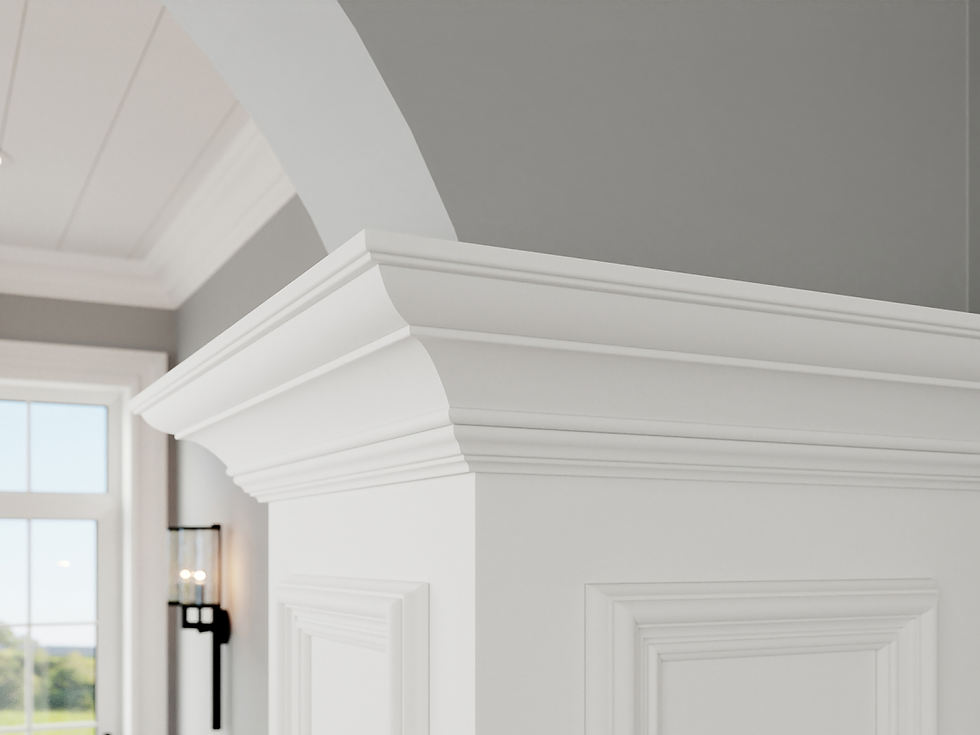
Crown molding and interior trim work is one of the most rewarding upgrades a homeowner in Springfield or Fairfax can invest in precisely because the return is immediate and visible in every room it touches. It does not require a structural renovation, a major disruption to daily life, or weeks of work to see the result. And for a housing market as competitive as Fairfax County's, a home with well-executed interior millwork simply presents better than one without it.
At Vivanco's Trim, interior trim work is a core part of what we do throughout Springfield, Fairfax, Annandale, and surrounding Northern Virginia communities. This guide covers the types of crown molding, how to choose the right profile for your home, where it makes the biggest impact, and when to call a professional instead of reaching for a miter saw.
Key Takeaways
Crown molding bridges the junction between wall and ceiling with a decorative profile that adds architectural depth and perceived height to any room.
Profile size should be proportional to ceiling height: narrow profiles for rooms with 8-foot ceilings, medium to wide profiles for rooms with 9-foot or higher ceilings.
Wood and MDF are the two dominant materials for painted applications in Northern Virginia homes; solid wood is preferred where staining is desired.
Crown molding works best as part of a complete interior trim system that includes baseboards, door casings, and window surrounds.
Precise corner cutting and a clean painted finish are where most DIY attempts fall short and where professional results are most visible.
In the competitive Fairfax County real estate market, interior trim details signal quality and care to buyers and consistently improve how a home presents at listing.
Table of Contents
What Crown Molding Is and What It Does
Crown molding is decorative trim installed at the junction where the wall meets the ceiling. Unlike baseboards, which address the transition between wall and floor, crown molding works at the top of the room, drawing the eye upward and creating a finished boundary between the vertical and horizontal planes of the space.
Beyond aesthetics, crown molding serves practical purposes. It conceals imperfections at the wall-ceiling joint, which is almost never a perfectly clean line in a settled home. It hides hairline cracks that appear over time as framing moves seasonally. And it creates a defined visual border that allows the ceiling and wall to be different colors, textures, or finishes without the seam between them looking unfinished.
The effect crown molding has on perceived ceiling height is one reason it is so consistently recommended for rooms that feel low or boxy. A properly sized profile with a clean white finish reflects light into the upper corners of a room and draws the eye along the perimeter of the ceiling rather than toward the junction of the walls. The room reads as taller than its actual measurement suggests.
In the competitive Fairfax County real estate market, interior trim details are a signal. A home with well-executed trim work throughout presents as thoughtfully maintained and finished. Buyers notice, and so do the agents and appraisers who walk through with them.
Crown Molding Profiles Explained
Most crown molding profiles are built from a handful of foundational shapes that have roots in classical Greek and Roman architecture. Understanding these profiles makes it easier to choose the right one for a specific home style or room.
Profile | Description | Best Application |
Cove | Single concave curve; clean and minimal | Contemporary, transitional, minimalist rooms |
Ogee | Classic S-curve combining concave and convex arcs | Traditional, colonial, and craftsman homes |
Dentil | Repeated small rectangular blocks along the base | Colonial, Federal, and formal traditional rooms |
Step | Angular layered profile with sharp horizontal lines | Modern, Art Deco, and contemporary interiors |
Craftsman | Simple flat profile with minimal ornamentation | Craftsman and bungalow-style homes |
Built-up | Multiple pieces layered for added depth and dimension | Formal rooms, dining rooms, high-ceiling spaces |
As noted in architectural trim guides from This Old House, the ogee is arguably the most traditional and widely used profile, offering a balanced S-shaped curve that works across many architectural styles. The cove profile has seen a significant resurgence in recent years as Northern Virginia homeowners update interiors toward a cleaner, more transitional aesthetic.
Profile width should scale with room dimensions. Narrow profiles between 2 and 4 inches work well in rooms with 8-foot ceilings where a larger profile would crowd the wall space between the top of the door casing and the bottom of the crown. Medium profiles between 4 and 6 inches are the most versatile and suit the majority of standard rooms throughout Fairfax County homes. Wide profiles over 6 inches make a strong architectural statement and are best reserved for large rooms with ceiling heights of 10 feet or more.
Choosing the Right Profile for Your Home Style
The relationship between the crown molding profile and the home's overall architectural character matters more than any individual preference for one profile over another. A poorly matched profile can feel jarring even when the installation itself is technically perfect.
Colonial and Traditional Homes: These are the most common home styles throughout Springfield, Fairfax, and Annandale, and they pair naturally with ogee profiles, dentil details, or classic multi-curve designs. Colonial crown molding draws from Roman architectural traditions and is characterized by restrained elegance, clean symmetry, and profiles that complement rather than compete with the door and window casings in the room.
Craftsman and Bungalow Homes: Craftsman trim philosophy emphasizes simplicity and honest construction over ornamentation. Simple flat or step profiles, wide baseboards, and square-edge casings are the right choices here. Over-ornamented crown in a craftsman interior looks out of place and detracts from the handmade quality that defines the style.
Transitional Homes: The majority of Northern Virginia remodels are landing in transitional territory, blending traditional architecture with cleaner, more contemporary finishes. Medium-width profiles with soft curves, such as a subtle ogee or a simple cove with a flat fillet at the base, work well here. The goal is detail without drama.
Contemporary and Modern Homes: Clean lines and sharp geometry define modern crown molding. Simple cove profiles, flat-edge step molding, or even a frameless painted reveal between wall and ceiling can work. The key is restraint. An ornate traditional profile in a modern interior immediately feels like a mismatch.
Pairing crown molding with consistent interior trim work throughout the home, including baseboards, door casings, and window surrounds, creates the cohesive look that distinguishes a professionally finished interior from one that was assembled piece by piece over time.
Where Crown Molding Makes the Biggest Impact
Not every room in a home is equally worth the investment. These are the spaces where crown molding delivers the most visible and lasting return in a Northern Virginia home:
Living and Family Rooms are the highest-impact rooms for crown molding. They are typically the largest spaces in the home, the most photographed for listings, and the first rooms buyers experience when walking through. A well-scaled profile in the living room sets the tone for the rest of the interior.
Dining Rooms benefit enormously from formal trim details. Crown molding in the dining room, particularly when paired with wainscoting on the lower walls, creates the full architectural treatment that defines a genuinely refined dining space.
Entryways and Foyers are the first impression of the home's interior quality. Crown molding here, even at a narrower profile, signals that the rest of the home has been thoughtfully finished.
Primary Bedrooms where the goal is a calm, elevated atmosphere benefit from clean cove or ogee profiles that add refinement without visual noise.
Home Offices have become a significant selling point in Fairfax County homes post-pandemic. Crown molding in an office elevates what might otherwise read as just a spare bedroom.
Rooms to approach with care: Bathrooms and kitchens can benefit from crown molding, but material selection is critical. Wood and standard MDF are not appropriate in high-humidity areas. Polyurethane or moisture-resistant MDF is required in these spaces to prevent swelling, warping, or paint failure over time.
Ready to add crown molding or interior trim in your Springfield or Fairfax home? Call Vivanco's Trim at (703) 499-2045 or request a free estimate online today.
Interior Trim Beyond Crown Molding
Crown molding is the most prominent interior trim element, but a truly finished interior depends on the entire trim system working together. Each component plays a specific role in defining the architectural language of the space.
Baseboards are the foundation of the trim system. They cover the gap between the finished flooring and the drywall at floor level and define the weight and character of the room's trim profile. Taller, more detailed baseboards read as more traditional and formal. Clean, flat baseboards read as modern. The baseboard should always be in proportion with the crown above it. A general design guideline is that the baseboard width should be roughly half the width of the crown molding it is paired with.
Door Casings frame every door opening in the home and are the trim element most visible at eye level. Consistent casing profiles throughout the home create a sense of cohesion that buyers and guests register even when they cannot name what is making the space feel intentional.
Window Surrounds address all four sides of each window opening and can range from a simple applied casing to a full surround with a sill, apron, and side casings. Window trim upgrades are particularly high-impact in rooms where windows are a focal point.
Chair Rails run horizontally along the wall at approximately 32 to 36 inches above the floor, historically installed to protect plaster walls from chair backs. Today they serve primarily as a design detail that divides the wall into distinct upper and lower zones. Chair rails pair naturally with wainscoting panels below and a painted upper wall above for a complete traditional treatment.
Picture Rails and Frieze Boards add a secondary horizontal element between the crown and the wall, building out the cornice zone for a more layered, formal appearance common in colonial and craftsman-era homes.
Materials Compared: Wood, MDF, and Polyurethane
Material | Best For | Moisture Resistance | Paintable | Stainable | Notes |
Solid Wood | Custom profiles, stain-grade applications | Low to moderate | Yes | Yes | Best option where staining is desired |
MDF | Painted applications in dry rooms | Low | Yes | No | Smooth surface, holds paint well, affordable |
Moisture-Resistant MDF | Painted trim near humid areas | Moderate | Yes | No | Better choice for rooms with variable humidity |
Polyurethane | Bathrooms, kitchens, and basements | High | Yes | No | Lightweight, detailed profiles available |
Plaster | Historic renovations, high-end custom work | Low | Yes | No | Premium option, requires professional installation |
For the majority of painted trim applications in Springfield and Fairfax homes, MDF is the practical and cost-effective choice. It holds paint exceptionally well, machines to a consistent profile without knots or grain variation, and is stable enough for interior dry rooms throughout Virginia's seasonal climate.
Solid wood is the right choice when the trim will be stained rather than painted, or when a custom profile needs to be milled to match existing original trim in an older home. It is also preferred by many craftsmen for its workability on complex corner treatments.
Polyurethane trim has improved significantly in quality over the past decade and is now a legitimate option for detailed profiles in rooms where moisture is a concern. It should not be used as a universal substitute for wood or MDF in dry rooms, where its lighter weight and different surface texture can produce results that feel less substantial than traditional materials.
Single-Piece vs. Built-Up Crown Molding
Most standard residential crown molding installations use a single-piece profile. A single piece of molding, typically between 3.5 and 5.5 inches wide, is cut at the appropriate spring angle and installed directly against both the wall and the ceiling.
Built-up crown molding uses multiple pieces layered together to create a more substantial and architecturally detailed cornice. A typical built-up assembly might include a backing strip or flat frieze board attached flat to the wall, a standard crown profile on top of it, and a smaller bead or casing piece at the base as a transition. The result has significantly more visual depth and shadow than any single-piece profile can achieve alone.
Built-up crown is the right choice for large formal rooms, dining rooms with 9-foot or higher ceilings, and any space where a single-piece profile would look undersized relative to the room's scale. It is also the approach used to match original historic trim in older Fairfax County homes where the original profile was a multi-piece cornice that no longer exists as a single stock item.
The trade-off is installation complexity. Each additional piece in the assembly requires additional cuts, nailing, and filling. The spring angle must be consistent across all pieces. For built-up crown, professional installation is strongly recommended unless the installer has specific experience with multi-piece cornice assemblies.
DIY vs. Professional Installation
Crown molding is one of the most frequently attempted DIY trim projects, and also one of the most frequently redone by professionals after the attempt. The challenge is not the concept but the execution. Every interior corner in a room requires two compound miter cuts that must meet perfectly with no visible gap. Every outside corner must be mitered to account for the exact angle of that specific corner, which is rarely a perfect 90 degrees in a settled home.
Add to this the spring angle at which crown molding sits away from both surfaces, the need to scribe or cope inside corners rather than miter them for a professional result, and the filling and sanding required before paint, and the margin for error becomes very narrow.
The finished paint job is where DIY crown molding most often falls short. A clean, paint-grade crown installation requires filling every nail hole flush, caulking every joint and transition line, and applying a smooth painted finish that does not telegraph the substrate below. Any gap, ridge, or uneven caulk line is highly visible along a horizontal trim element at ceiling level because light rakes across it from every angle in the room.
Professional installation ensures consistent spring angle, coped inside corners that accommodate seasonal wood movement without opening, and a finished surface that holds paint cleanly. The investment in professional trim work is most visible precisely because the finished result looks effortless, which is exactly what it should look like.
Frequently Asked Questions
What size crown molding is right for an 8-foot ceiling?
For standard 8-foot ceilings, a profile between 3 and 4.5 inches wide is appropriate. This leaves adequate wall space between the top of door casings and the bottom edge of the crown. A profile wider than 5 inches on an 8-foot ceiling tends to crowd the room and can make the walls feel shorter rather than taller.
Can crown molding be installed in a room with a vaulted or tray ceiling?
Yes, though it requires more planning. Vaulted ceilings require a flexible polyurethane profile or custom-cut wood segments that follow the slope. Tray ceilings are a natural fit for crown molding installed at the transition between the recessed field and the angled sides of the tray, which creates a very clean architectural detail.
Does crown molding need to be painted the same color as the ceiling?
No. Crown molding is most commonly painted the same color as the trim throughout the home, typically white or off-white, while the ceiling above it is painted ceiling white. This creates a clean definition between the wall color and the ceiling. Some designers extend the ceiling color down onto the crown for a more subtle treatment in modern or transitional rooms.
How long does crown molding installation take in a typical room?
A single standard room with four walls and 8-foot ceilings typically takes a professional installer three to five hours including cutting, installation, nail-filling, caulking, and touch-up. Larger rooms, rooms with complex angles, or multi-room projects are scheduled accordingly. Full-home trim installations are typically completed over two to three days depending on scope.
Does interior trim work add value to a home in Fairfax County?
Interior trim details including crown molding, consistent door casings, and well-proportioned baseboards consistently improve how a home presents to buyers and appraisers in the Fairfax County market. While trim work is not typically called out as a separate line item in an appraisal, a home with complete and well-executed interior millwork consistently presents better than comparable homes without it, which influences both perceived value and buyer competition.
Schedule a Free Consultation with Vivanco's Trim
Whether you are adding crown molding to a single room, upgrading baseboards and door casings throughout the home, or planning a complete interior trim package, Vivanco's Trim is ready to help. We serve homeowners throughout Fairfax County and a 15 to 20-mile radius of Woodbridge, Virginia, providing interior trim and millwork services alongside our staircase and renovation work.
We start with a free in-home consultation, review your existing trim conditions, walk through profile and material options that suit your home's architecture, and provide a clear estimate before any work begins. Our craftsmen take corner quality, spring angle consistency, and finish work seriously on every project because the details at ceiling level are exactly where quality shows.
Call (703) 499-2045 or (571) 567-4424 7646 Fullerton Rd Suite A, Springfield, VA 22153 Monday – Friday: 7:00 AM – 7:00 PM | Weekends: By Appointment
References:
This Old House. (2024). What To Know About Crown Molding Forms.
Creative Crown. (2024). Choosing the Right Style of Crown Molding for Your Home.
Haute Living Design Network. (2025). A Guide to Crown Molding Design.


Comments