
How to Choose a Trim Carpenter in Northern Virginia: 7 Questions to Ask Before You Hire

Finding a trim carpenter who can install crown molding, wainscoting, or door casings to a professional standard in Northern Virginia is not as simple as searching online and calling the first result. Finish carpentry is a skilled trade, and the quality difference between an experienced trim carpenter and someone with general handyman skills is immediately visible in the finished result.
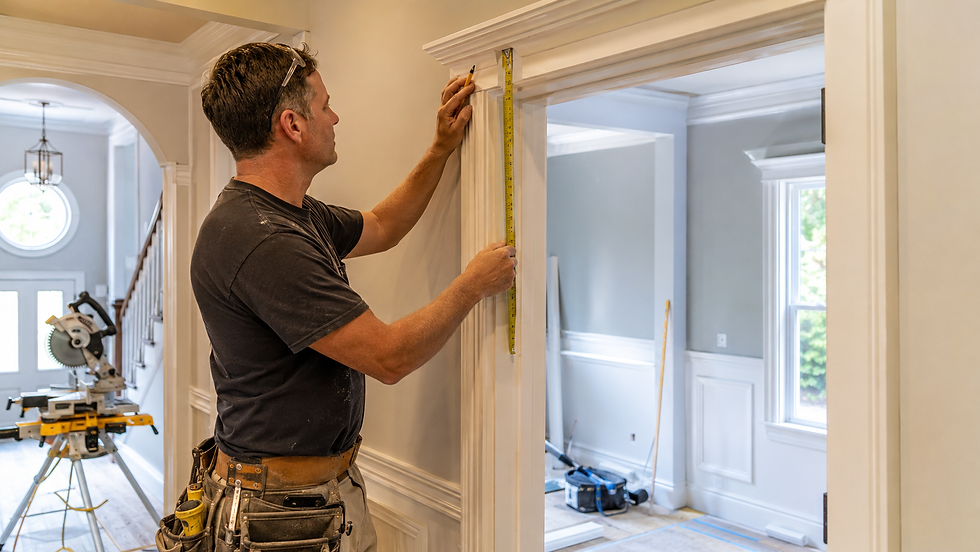
The wrong hire means mitered corners that do not close, crown molding that pulls away from the ceiling after one winter, and painted surfaces that telegraph every nail hole and caulk gap from across the room. The right hire means a finished interior that looks the way it did in your inspiration photos and holds up for decades.
These are the seven questions every Northern Virginia homeowner should ask before signing a contract with a trim carpenter.
Key Takeaways
Finish carpentry requires specialized skills distinct from general contracting or handyman work; not every carpenter produces professional trim results.
A trim carpenter working in Northern Virginia should have specific experience with the climate conditions that affect wood movement and joint longevity in this region.
Ask to see photos of completed projects in similar home styles and request references from recent clients before committing.
Licensing, insurance, and a written contract with scope, materials, and timeline spelled out are non-negotiable requirements.
The lowest bid is rarely the right choice for finish carpentry work where quality is visible in every corner and joint.
A professional trim carpenter should be able to advise on profile selection, material choice, and how new trim coordinates with what is already in the home.
Table of Contents
Why Trim Carpentry Is a Specialized Skill
Interior trim installation looks deceptively simple from the outside. Molding goes on the wall. Nails go in. Paint covers the seams. The reality of what separates professional trim work from amateur results is in the details that most homeowners only notice after the work is done and the paint is dry.
Coping inside corners rather than mitering them so joints stay tight through seasonal wood movement. Back-cutting casing to fit flush against walls that are not perfectly plumb. Setting a consistent reveal around every door and window opening. Scribing base shoe to follow an uneven floor without gaps. Filling nail holes to the exact depth that allows paint to lay flat without telegraphing the substrate below. These are skills that take years of repetition to develop and are immediately visible in the finished result to anyone with a trained eye.
In Northern Virginia specifically, a trim carpenter who does not understand how Virginia's seasonal humidity affects wood movement and joint behavior will produce work that looks acceptable at installation and opens gaps by the following spring. According to Fine Homebuilding, trim installation that does not account for seasonal wood movement is one of the most common sources of callbacks and warranty disputes in residential finish carpentry.
The 7 Questions to Ask Before You Hire
1. Do You Specialize in Interior Trim or Is It Part of a Broader General Contracting Business?
This distinction matters. A trim specialist who works on crown molding, baseboards, wainscoting, and door and window casings every week develops instincts and efficiency that a general contractor who occasionally takes trim jobs cannot match. Ask directly what percentage of their work is interior trim and finish carpentry. A specialist's answer will be clear and specific.
2. Can You Show Me Photos of Completed Projects in Homes Similar to Mine?
Every experienced trim carpenter has a portfolio. Photos of completed installations in colonial, transitional, and craftsman homes throughout Fairfax County and Northern Virginia give you a direct window into the quality of their coping, their corner joints, and their finish work. Look at inside corners closely. Look at how the baseboard meets the floor line. Look at the reveal consistency around doors. Those details tell you everything.
3. Are You Licensed and Insured in Virginia?
Virginia requires contractors performing work above certain thresholds to hold a Class A, B, or C contractor license from the Virginia Department of Professional and Occupational Regulation (DPOR). Liability insurance protects you if the contractor damages your property or is injured on site. Workers' compensation coverage protects you from liability if a worker is injured during the project. Ask for proof of both before signing anything.
4. Do You Provide a Written Estimate That Specifies Materials, Scope, and Timeline?
A verbal estimate is not a contract. A professional trim carpenter should provide a written document that specifies the profile and material for every trim element being installed, the rooms and openings included in the scope, the estimated timeline from start to completion, and the payment schedule. Ambiguity in any of these areas is a problem that surfaces during the project rather than before it.
5. How Do You Handle Profile Selection and Coordination With Existing Trim?
A skilled trim carpenter does not just install what you hand them. They should be able to look at your existing crown molding, baseboard, and door casings and advise on what profile and material will coordinate correctly with what is already in the home. If the answer to this question is vague or defers entirely to the homeowner without guidance, that is a signal the carpenter is not thinking at the level of a trim specialist.
6. What Is Your Process for Inside Corners: Miter or Cope?
This is a technical question that reveals a lot. Professional finish carpenters cope inside corners on molding profiles rather than mitering them. Coping produces a joint that stays tight through wood movement. A mitered inside corner on a wall that is not perfectly square will open visibly within one heating season. If the answer is "I miter everything," that is a meaningful red flag for trim work in an older Northern Virginia home where walls are rarely perfectly plumb or square.
Corner Method | How It Works | Best For |
Coped Joint | One piece cut to profile of the other | Inside corners on all molding profiles; accommodates walls that are not square |
Mitered Joint | Both pieces cut at 45 degrees | Outside corners; picture frame trim; contemporary flat profiles |
Scribed Joint | Cut to follow an irregular surface | Base shoe at uneven floors; trim against stone or irregular walls |
7. Do You Have References From Recent Projects in Northern Virginia?
Ask for two or three references from projects completed in the past twelve months and actually call them. Ask about the quality of the finish work, whether the project stayed on schedule, how the carpenter handled any issues that came up, and whether they would hire the same contractor again. A contractor who cannot or will not provide references is a contractor you should not hire.
Red Flags to Watch For
No written estimate or contract. Any contractor who resists putting the scope and price in writing is exposing you to scope creep and price disputes during the project.
Significantly lower bid than others. In finish carpentry, a bid that is 30 to 40 percent below competing bids usually means shorter acclimation time, faster installation with less attention to detail, or materials that do not match what was specified. Quality trim work takes the time it takes.
No portfolio or vague answers about past work. An experienced trim carpenter has examples. If the portfolio is limited to stock photos or projects that look nothing like your home, treat that as a signal.
Cannot explain why they use specific profiles or materials. A trim specialist should be able to tell you exactly why they are recommending MDF versus solid wood for a specific application, or why a cove profile suits your home better than an ogee. Vague answers on technical questions reflect limited experience.
No mention of acclimation. Any carpenter planning to install wood trim in a Northern Virginia home without mentioning acclimation time for the materials is skipping a step that will show up in the finished work within a season.
What a Professional Estimate Should Include
A written estimate from a professional trim carpenter in Northern Virginia should specify:
Each trim element being installed (crown molding, baseboard, door casing, window casing, chair rail, wainscoting, etc.)
Profile name or description and material for each element
Rooms and specific openings included in scope
Whether nail holes, caulking, and priming are included or billed separately
Payment schedule tied to project milestones, not arbitrary dates
Estimated start and completion dates
What is not included and would constitute a change order
Frequently Asked Questions
What is the difference between a trim carpenter and a general contractor?
A trim carpenter specializes in interior finish work including crown molding, baseboards, door and window casings, wainscoting, and related molding. A general contractor manages broader construction projects and may subcontract trim work. For dedicated trim projects, a specialist produces better results.
Does a trim carpenter need a license in Virginia?
Yes. Virginia requires contractors performing work above certain thresholds to hold a contractor license from the Virginia Department of Professional and Occupational Regulation (DPOR). Always verify a contractor's license before hiring.
How do I verify a contractor's license in Virginia?
You can verify a Virginia contractor license through the DPOR online license lookup using the contractor's name or license number. It takes less than two minutes and confirms whether the license is active and in good standing.
What should interior trim installation cost in Northern Virginia?
Trim installation cost varies widely based on profile complexity, material, room count, and linear footage. Obtaining three written estimates from licensed contractors for the same defined scope is the most reliable way to understand the market rate for your specific project.
How long should crown molding installation take in a typical Northern Virginia home?
A professional trim carpenter typically completes a standard room with four walls in three to five hours for single-piece crown molding. A multi-room project across a main level takes two to three days. Built-up assemblies or complex cornice work extend the timeline accordingly.
Why Northern Virginia Homeowners Choose Vivanco's Trim
Vivanco's Trim, led by Jose Vivanco, is a licensed and insured interior trim and finish carpentry contractor serving homeowners throughout Springfield, Fairfax, Annandale, Woodbridge, and surrounding Northern Virginia communities. We specialize in crown molding installation, wainscoting, baseboard and door casing, chair rail, built-up crown, and complete interior trim packages alongside our stair remodeling and flooring services.
Every project begins with a free in-home consultation where we assess your existing trim conditions, walk through profile and material options that suit your home's architecture, and provide a written estimate with full scope detail before any work begins.
Call (703) 499-2045 or (571) 567-4424 7646 Fullerton Rd Suite A, Springfield, VA 22153 Monday through Friday: 7:00 AM to 7:00 PM | Weekends: By Appointment
About the Author
The team at Vivanco's Trim, led by Jose Vivanco, brings years of hands-on finish carpentry experience to interior trim installation, stair remodeling, flooring, and whole-home renovation projects throughout Springfield, Fairfax, Annandale, and surrounding Northern Virginia communities. Vivanco's Trim is licensed, insured, and committed to delivering finish work that reflects genuine craftsmanship on every project.
References
Virginia Department of Professional and Occupational Regulation (DPOR) — Official source for contractor license verification, licensing requirements, and consumer protection resources in Virginia.
Fine Homebuilding — Hiring a Finish Carpenter — Industry guidance on evaluating trim carpenter qualifications, reading estimates, and understanding finish carpentry standards.


Comments